


Bolivia has entered a new political chapter as centrist-right forces make decisive gains, bringing to a close nearly two decades of socialist rule. The shift, confirmed in the latest round of elections, marks the end of an era dominated by the Movement for Socialism (MAS), the party founded by Evo Morales. For a country that once symbolized Latin America’s leftward wave, the change suggests both fatigue with entrenched leadership and the search for pragmatic alternatives.



The End of a Political Cycle
The decline of Bolivia’s socialist project was gradual but unmistakable. Morales, the country’s first Indigenous president, swept to power in 2006, riding on promises of social inclusion, economic redistribution, and resistance to neoliberalism. His government expanded welfare programs, nationalized key industries, and delivered strong economic growth during the global commodities boom. For years, MAS appeared unbeatable at the ballot box.
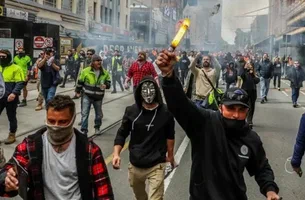
But cracks in the model became evident after the boom faded. Economic growth slowed, corruption scandals mounted, and political polarization deepened. Morales’s controversial bid for a fourth term in 2019, despite a referendum rejecting indefinite re-election, triggered massive protests and eroded the party’s credibility. Though MAS regained the presidency briefly under Luis Arce in 2020, the aura of inevitability had faded.
Now, the decisive swing toward centrist-right forces reflects both frustration with socialist governance and shifting priorities among Bolivia’s voters.

A New Coalition Emerges
The victors of this electoral cycle are not hardline conservatives but a coalition of centrist-right parties that emphasize stability, market confidence, and institutional reform. They have distanced themselves from the authoritarian excesses of Morales’s later years while promising to preserve elements of Bolivia’s redistributive model.
Their message resonated with urban middle classes, small business owners, and younger voters who feel left behind by the stagnation of recent years. Promising job creation, anti-corruption initiatives, and investment in modern infrastructure, the new government presents itself as a pragmatic alternative to the ideological battles that defined the MAS era.
MAS in Disarray
For the once-dominant Movement for Socialism, the results are sobering. The party remains strong in rural and Indigenous regions, where Morales built his original base, but it has struggled to adapt to new political realities. The leadership is divided between loyalists of Morales and those backing Arce, a split that further undermines its credibility.
Despite its decline, MAS will not vanish overnight. It still commands a substantial bloc in parliament and can mobilize large numbers of supporters. But its capacity to define Bolivia’s political future has been sharply reduced, raising questions about whether it can reinvent itself or if it will splinter under the weight of internal rivalries.
Regional Implications
Bolivia’s political shift carries broader significance for Latin America. The country was once grouped with Venezuela, Ecuador, and Nicaragua as part of the “pink tide” of leftist governments challenging U.S. influence in the region. Now, with MAS weakened and centrist-right leaders in the ascendancy, Bolivia signals that the wave has receded, at least for now.
Neighboring countries will be watching closely. Investors and international financial institutions are likely to welcome the new administration’s pro-market tilt, even if cautious. At the same time, regional leftist movements may view Bolivia’s turn as evidence of the limits of prolonged socialist governance without economic dynamism to sustain it.
Challenges Ahead
For the incoming government, the honeymoon may be short-lived. Bolivia faces significant structural challenges: slowing growth, heavy reliance on natural gas exports, and mounting demands for social spending. Balancing fiscal discipline with public expectations will test the coalition’s unity and credibility.
Moreover, political divisions remain deep. Morales still commands a loyal following, and any attempt to roll back MAS-era programs could spark protests. The memory of past unrest looms large, and the new leaders will need to tread carefully to avoid igniting fresh waves of instability.
Internationally, Bolivia’s shift may reset relations with the United States and European Union, as well as with regional powers like Brazil. While a more centrist government could improve trade ties and attract investment, it risks alienating traditional allies such as Venezuela and Cuba, which relied on Bolivia as a partner in regional forums.
A Turning Point
The end of Bolivia’s socialist era is more than a political transition; it is a symbolic moment for a nation that once stood at the forefront of Latin America’s progressive experiment. For many Bolivians, the move reflects a desire for pragmatism over ideology, for renewal after years of fatigue with entrenched leadership.
Whether the centrist-right coalition can deliver lasting change remains to be seen. Its success will depend on navigating the complex balance between reform and continuity, between global markets and domestic demands, and between the desire for stability and the risk of backlash.
What is clear, however, is that Bolivia has entered uncharted territory. The political dominance of MAS has ended, and a new era — defined less by ideology than by compromise and adaptation — is now beginning.


