


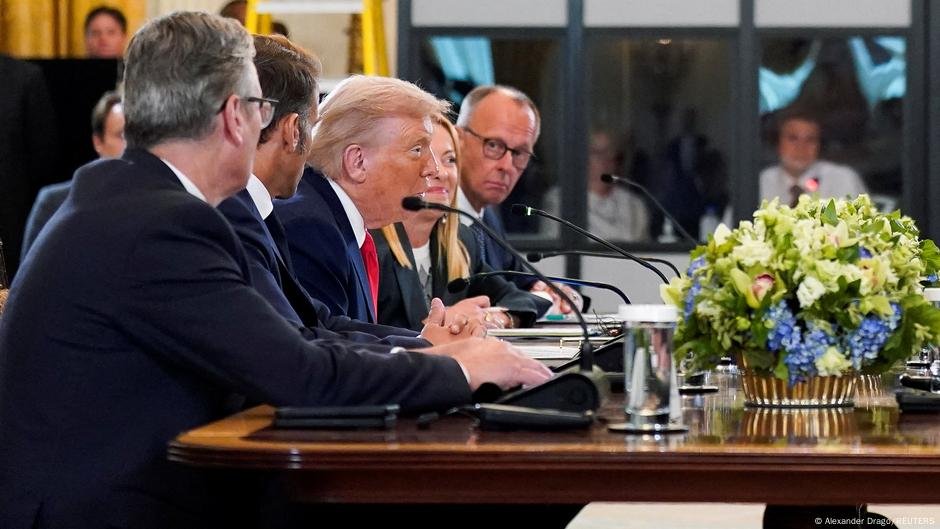
European leaders are intensifying diplomatic efforts to secure Donald Trump’s backing for Ukraine, as the former U.S. president reemerges as a dominant figure in American politics. With the war entering its third year and Europe grappling with economic pressures and political fractures, leaders across the continent worry that wavering U.S. support could undermine both Ukraine’s war effort and Europe’s own security.
The outreach underscores a growing recognition in Europe that Trump—whether as a candidate or potential future president—could decisively shape the trajectory of Western policy toward Kyiv.


A Region on Edge
Europe’s leaders have long feared the consequences of a protracted war with no clear end in sight. Energy markets remain volatile, inflation continues to burden households, and political fatigue is setting in. Populist parties across the continent are capitalizing on discontent, with some calling for a reassessment of Europe’s commitment to Ukraine.
Against this backdrop, the possibility of diminished U.S. engagement looms large. During his presidency, Trump often criticized NATO allies for underinvesting in defense and expressed skepticism about Washington’s financial commitments abroad. His recent remarks that he could end the Ukraine conflict “in 24 hours” have only deepened anxieties about what a Trump-led White House might mean for Kyiv.

Macron and Scholz Take the Lead
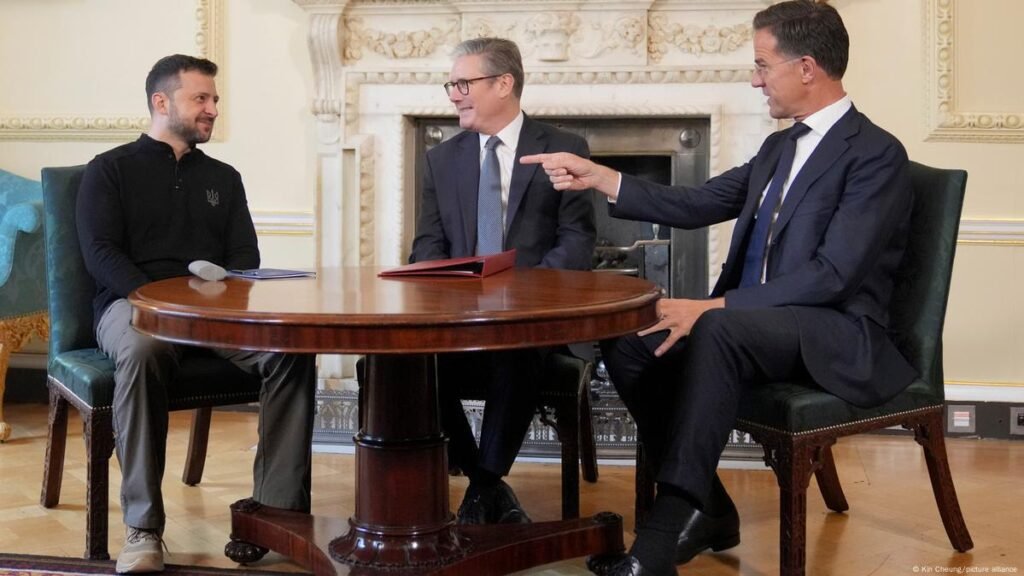
French President Emmanuel Macron and German Chancellor Olaf Scholz have emerged as key figures urging Trump to clarify his position. In private conversations with U.S. interlocutors, both leaders have emphasized that any signal of retreat from Washington would embolden Moscow and destabilize Europe.
Macron, who has oscillated between calls for robust support for Ukraine and suggestions of future security talks with Russia, framed the issue bluntly during a recent European Council session: “Without American commitment, the foundation of our collective security is at risk.” Scholz, more cautious in tone, stressed that Germany and Europe have already dramatically expanded their defense spending, but insisted U.S. leadership remains indispensable.
Eastern Europe’s Alarm
For leaders in Eastern Europe, particularly Poland and the Baltic states, Trump’s ambivalence is viewed with even greater urgency. These countries see themselves on the frontline of potential Russian aggression and argue that Ukraine’s defense is inseparable from their own.
Polish Prime Minister Donald Tusk recently warned that “a wavering America would be a gift to Putin.” Baltic leaders have echoed this sentiment, lobbying Washington directly while urging their Western European counterparts to maintain pressure on Trump to publicly commit to Ukraine’s sovereignty.
Trump’s Calculations
For Trump, the Ukraine war has become both a political opportunity and a challenge. His base of supporters tends to be skeptical of foreign entanglements, and many resonate with his argument that U.S. resources should prioritize domestic needs. At the same time, he has sought to portray himself as a master dealmaker who could succeed where President Joe Biden has not.
So far, Trump has avoided offering specifics, leaving European leaders guessing. Would he push Ukraine toward territorial concessions in exchange for a cease-fire? Would he condition aid on Europe shouldering more of the financial burden? Or would he retreat entirely from commitments made under Biden?
Europe’s Uneasy Unity
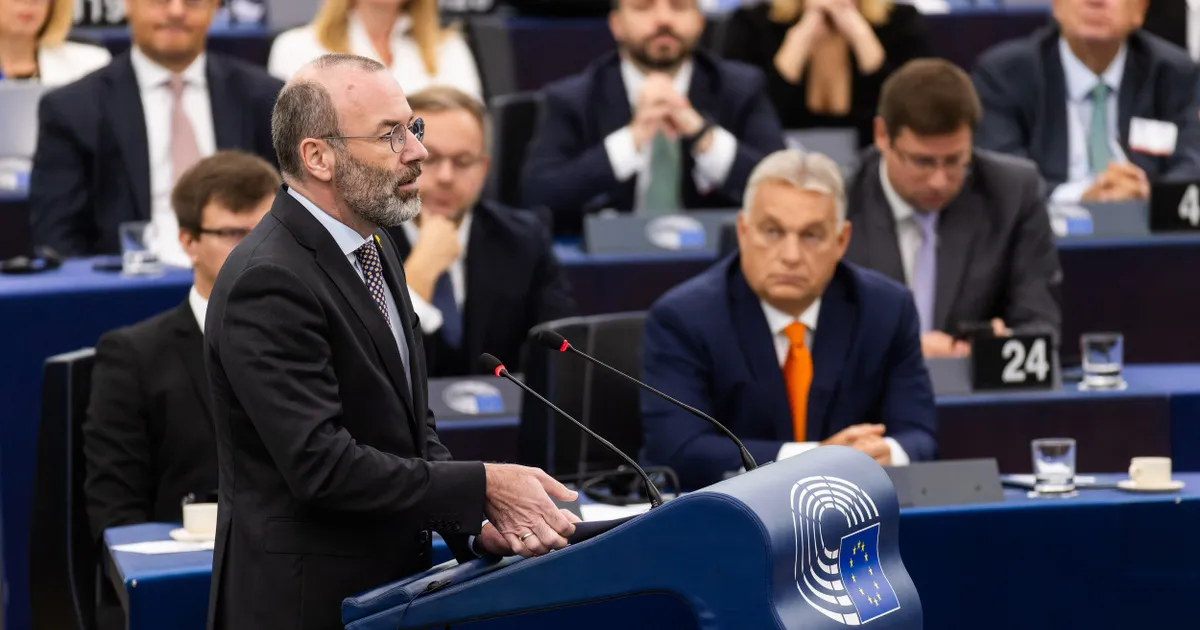
The uncertainty has exacerbated tensions within Europe itself. While countries like Poland and Lithuania insist on unwavering military support for Kyiv, others—such as Hungary under Viktor Orbán—have openly questioned the viability of indefinite aid. The debate has highlighted divisions within the EU about how far Europe is willing, or able, to go if the U.S. scales back its role.
To offset the risk, European Commission officials have floated proposals for a long-term European defense fund dedicated to Ukraine. Yet such plans face political hurdles, including disagreements over financing and concerns about duplicating NATO structures.
A High-Stakes Gamble
The effort to secure Trump’s support reflects Europe’s broader gamble: that proactive engagement now may prevent disruptive surprises later. European diplomats are quietly increasing their outreach to Trump advisers, hoping to shape his policy calculus before campaign season fully intensifies.
At the same time, EU leaders are preparing for contingencies. “We cannot afford to rely solely on the goodwill of American politics,” one senior European official said. “But neither can we afford to alienate the man who could soon shape U.S. foreign policy again.”
Conclusion
As the war in Ukraine grinds on, Europe finds itself caught between the urgency of sustaining Kyiv and the uncertainty of American politics. The push to secure Trump’s support is not just about reassuring Ukraine—it is about safeguarding Europe’s own security architecture at a time of historic strain.


