


Ukrainian President Volodymyr Zelenskyy’s high-stakes visit to Washington this week drew an unusual show of transatlantic unity, as several European leaders joined him at the White House to push back against growing calls for Kyiv to consider land-for-peace concessions in its war with Russia. Their coordinated message underscored the widening fault lines in Western policy debates and the urgency of ensuring that Ukraine’s territorial integrity is not traded away in pursuit of a fragile settlement.


A United Front in Washington
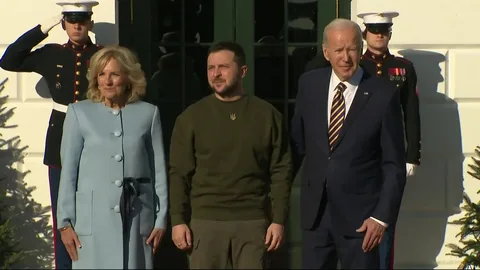
Alongside U.S. President Joe Biden, Zelenskyy was flanked by French President Emmanuel Macron, German Chancellor Olaf Scholz, and European Commission President Ursula von der Leyen during a joint press appearance that marked one of the strongest demonstrations of Western unity since Russia’s full-scale invasion began in 2022.
“The lesson of history is clear: appeasement does not bring peace,” Macron said, invoking Europe’s 20th-century experiences with authoritarian aggression. Scholz emphasized that “any negotiations must be decided by Ukraine, not imposed upon it,” while von der Leyen framed the war as a test of the entire international order.
For Zelenskyy, the gathering offered a powerful counterweight to mounting pressures from skeptics in Washington and some European capitals, who argue that prolonging the war risks further economic disruption and political instability.

U.S. Political Crosswinds
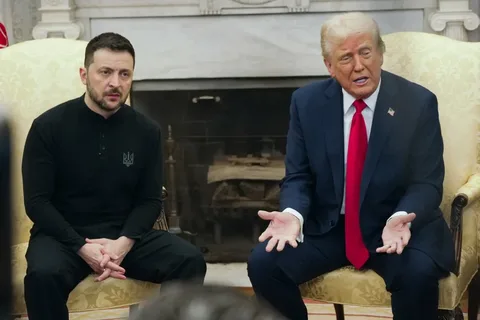
The timing of the joint appearance was deliberate. Zelenskyy’s Washington trip coincided with an intense domestic debate in the United States, as former President Donald Trump and his allies raised the possibility of encouraging Kyiv to consider territorial concessions as part of a broader deal with Moscow. Trump’s recent remarks suggesting that “peace could come quickly if hard choices are made” have alarmed European leaders who fear Washington may pivot toward a more transactional approach to the conflict.
Biden, while reaffirming his administration’s support for Ukraine, faces challenges of his own. Congress remains divided on continued military assistance, with some lawmakers warning about the fiscal burden of supplying Ukraine. The joint appearance with European leaders was as much about shoring up domestic support as it was about sending a message to Moscow.
Europe’s Stakes in the Conflict
For Europe, the stakes could not be higher. The war has already reshaped the continent’s security architecture, triggered energy crises, and tested political resilience in the face of rising populism. Allowing Russia to consolidate control over occupied territories, European officials argue, would not only embolden Moscow but also set a dangerous precedent for other revisionist powers.
Von der Leyen stressed that the EU’s credibility was on the line. “If aggression pays in Ukraine, no border in Europe will be safe,” she said. Macron, often criticized for his attempts to keep diplomatic channels open with the Kremlin, appeared unequivocal this time: “There can be no peace that rewards aggression.”
Zelenskyy’s Balancing Act
Zelenskyy used his visit to press for renewed U.S. security guarantees and additional aid packages. His messaging balanced gratitude for Western support with a stark warning of what defeat could mean. “Every concession of land to Russia is a concession to tyranny,” he declared at the joint press event.
Behind closed doors, however, officials acknowledged the complexity of sustaining Western unity. While Poland, the Baltic states, and Nordic countries remain staunch supporters of Ukraine’s maximalist position, some southern European governments have shown signs of fatigue. Rising energy prices, inflation, and migration pressures are fueling domestic debates that could erode consensus.
Moscow’s Response
The Kremlin dismissed the Washington gathering as a “theatrical show” and reiterated its claim that Russia’s annexed territories are non-negotiable. Russian state media seized on Trump’s remarks to argue that Western unity is fracturing and that Moscow’s strategy of outlasting its opponents is working.
Yet, analysts note that Moscow faces its own constraints. Economic sanctions, battlefield losses, and growing dependence on China have left Russia with limited room to maneuver. A Western show of unity, even if fragile, complicates the Kremlin’s hopes of exploiting political divisions to secure a favorable settlement.
The Road Ahead
Despite the joint declarations, significant questions remain unanswered. Will the U.S. Congress approve additional aid in the coming months? Can European governments sustain public support as the war enters yet another winter? And most importantly, how long can Zelenskyy resist mounting pressures to consider compromises if the battlefield remains deadlocked?
For now, the message from Washington was clear: land-for-peace is not an acceptable formula. The presence of Europe’s top leaders alongside Zelenskyy gave the Ukrainian president a much-needed diplomatic boost, but whether that unity can be preserved under the weight of political, economic, and military realities is another matter.
Conclusion
The Washington summit underscored both the resilience and fragility of Western support for Ukraine. By rejecting the idea of territorial concessions, European leaders sought to reaffirm a core principle of international law and send a message of deterrence to Moscow. Yet, the undercurrents of doubt in both Washington and Europe suggest that unity may become harder to sustain as the war drags on.


