

EU Leaders Unite with Zelenskyy for White House Peace Talks
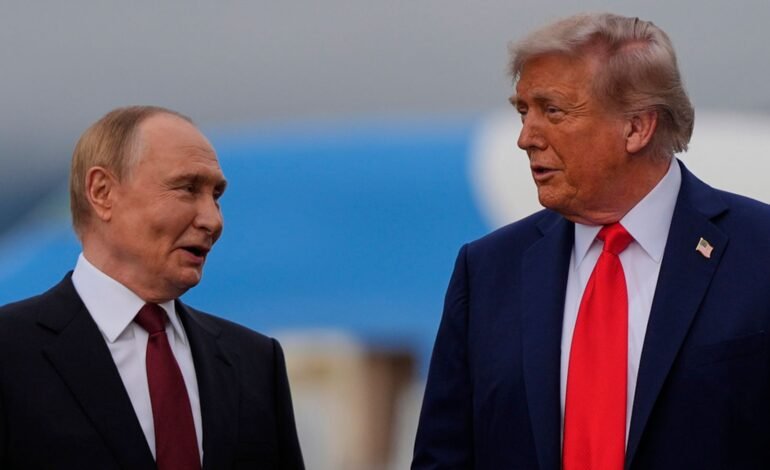

In an extraordinary show of transatlantic unity, European Union leaders joined Ukrainian President Volodymyr Zelenskyy at the White House this week for high-level peace talks aimed at charting a path toward ending the war with Russia. The summit, hosted by U.S. President Joe Biden, brought together key European heads of state, underscoring the urgency of forging a coordinated diplomatic strategy as the conflict enters its third year.
For Kyiv, the gathering offered an opportunity to lock in political backing at a time when battlefield gains remain elusive and doubts linger about long-term Western resolve. For Washington and Brussels, the meeting was about demonstrating that support for Ukraine remains broad, strategic, and united, even as political pressures grow on both sides of the Atlantic.
A Historic Diplomatic Convergence
Rarely have so many European leaders convened simultaneously in Washington for discussions centered on a single conflict. The symbolism was deliberate: after months of speculation about wavering commitment and diverging priorities, the White House wanted to show the Kremlin that the West remains firmly aligned.
In his opening remarks, Biden emphasized that “Russia cannot outlast our unity, and Ukraine will not be left to stand alone.” European Commission President Ursula von der Leyen echoed that sentiment, calling the summit “a pivotal moment for Europe and America to reaffirm their shared commitment to peace through strength.”
Zelenskyy’s Balancing Act
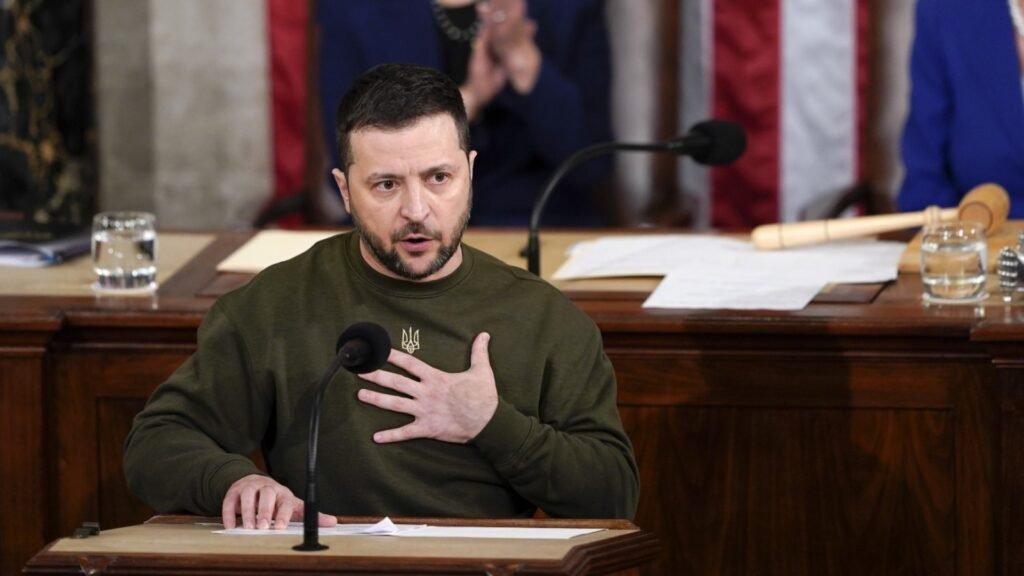
For Zelenskyy, the talks carried high stakes. Ukraine’s forces, still engaged in punishing battles across the eastern and southern fronts, have struggled to achieve breakthroughs. Public patience at home is being tested by mounting casualties and economic strain.
The Ukrainian president arrived in Washington with two priorities: securing additional aid and ensuring that any peace framework does not compromise Ukraine’s territorial integrity. He sought to reinforce his position that negotiations can only proceed on Kyiv’s terms—namely, the withdrawal of Russian troops and the restoration of internationally recognized borders.
“Peace cannot be built on surrender,” Zelenskyy told reporters. “Ukraine is grateful for this unity, but we must remain firm that justice and sovereignty are non-negotiable.”
European Dynamics
The presence of EU leaders reflected Europe’s own stake in the war’s outcome. Countries on NATO’s eastern flank—such as Poland and the Baltic states—have pressed for uncompromising support for Ukraine, warning that any territorial concessions would embolden Moscow to test Europe’s defenses further.
Meanwhile, larger Western European states, including France and Germany, have quietly explored possible diplomatic openings. French President Emmanuel Macron, while reaffirming military aid commitments, has also floated the idea of preparing a long-term European security framework that could involve Russia in the postwar order. This dual-track approach—military support alongside diplomatic engagement—illustrates the delicate balancing act within Europe itself.
The summit allowed these perspectives to converge under a unified message: negotiations, yes—but only if they respect Ukraine’s sovereignty.
U.S. Political Crosscurrents
For Biden, the meeting also served a domestic purpose. With U.S. elections approaching, support for Ukraine has become increasingly politicized. While Democrats remain largely united behind continued aid, some Republicans have questioned the scale of assistance.
By hosting Zelenskyy alongside European leaders, the White House sought to frame the war not as a distant conflict but as a defining test of global order—one that directly impacts U.S. credibility as a world leader. Biden’s aides privately acknowledged that demonstrating strong European buy-in helps blunt criticism that America is bearing a disproportionate burden.
Moscow’s Reaction
The Kremlin dismissed the summit as “political theater,” accusing the West of plotting to prolong the war at Ukraine’s expense. Russian officials reiterated that any peace process must recognize “new territorial realities”—a reference to Moscow’s illegal annexations of Ukrainian land.
Yet analysts noted that the optics of unified Western leadership could unsettle Moscow, which has long banked on divisions within NATO and the EU to weaken support for Kyiv. “The more the West projects unity, the harder it becomes for Russia to exploit cracks,” said one European diplomat.
Toward a Framework for Peace
While the summit did not produce a detailed peace plan, it laid the groundwork for what officials described as a “coordinated path to negotiations.” Commitments included:
- A pledge of continued military and financial support for Ukraine.
- Agreement to explore multilateral security guarantees for Kyiv modeled on U.S. commitments to Israel.
- A joint statement reaffirming that any settlement must be based on Ukraine’s internationally recognized borders.
Officials stressed that the talks were not about pressuring Kyiv into concessions, but about aligning Western positions to prepare for the possibility of future diplomacy.
Conclusion
The White House peace talks with Zelenskyy and EU leaders may not have delivered an immediate roadmap to end the war, but they succeeded in sending a clear message: the West remains united in backing Ukraine’s sovereignty and determined to deny Russia the rewards of aggression.
For Zelenskyy, the summit provided both material assurances and symbolic validation that Ukraine’s fight is not being waged alone. For Biden and his European counterparts, it was an opportunity to reinforce transatlantic solidarity at a time when political divisions could have undermined it.